
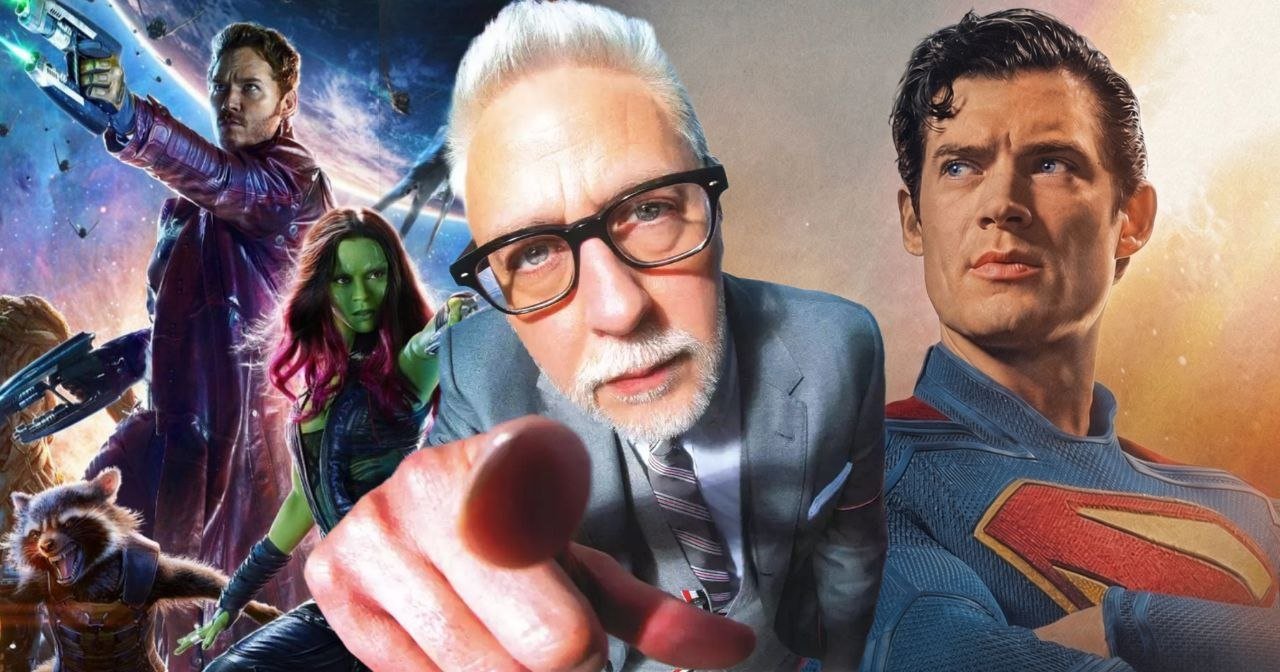
James Gunn’s Guardians of the Galaxy Approach helped turn a group of relatively obscure Marvel characters into household names. However, applying that same creative philosophy to the DC Universe could create a very different challenge.
When Marvel Studios hired Gunn to bring the Guardians of the Galaxy to the big screen, he had considerable freedom. Star-Lord, Gamora, Drax, Rocket, and Groot were not household names in 2014. Even many comic book fans knew little about their histories. That gave Gunn room to reinterpret the characters, add his distinctive personality, and create versions that connected with mainstream audiences.
The DC Universe presents a much different situation. Characters such as Superman, Green Lantern, Supergirl, Batman, and Wonder Woman have decades of established history behind them. Millions of fans already have their own understanding of these heroes. That raises an important question about James Gunn’s Guardians of the Galaxy Approach: Can a creative formula that worked with relatively unknown characters work just as well with DC’s most established heroes?
James Gunn’s Guardians of the Galaxy Approach Worked With a Blank Canvas
Gunn’s Guardians movies benefited from an unusual advantage. Marvel Studios could effectively ask, “
What do we want the Guardians of the Galaxy to be?”
There was no single mainstream version of Star-Lord or Rocket that audiences expected Marvel to preserve. Gunn could therefore combine different comic book elements with his own ideas. He gave the characters distinctive personalities, emotional arcs, humor, music, and relationships.
More importantly, he gave audiences a reason to care about characters they barely knew. That approach ultimately helped make Star-Lord, Gamora, Drax, Rocket, and Groot definitive mainstream versions of the characters. The situation changes when the same philosophy reaches Superman or Green Lantern.
DC’s Biggest Heroes Already Have Established Identities
Superman is not a blank canvas. Neither are Hal Jordan, John Stewart, Supergirl, Batman, Wonder Woman, or The Flash. These characters have accumulated decades of stories, relationships, personalities, and mythology. That does not mean adaptations should copy the comics exactly.
Some of the most successful comic book movies have changed major elements from their source material. The difference comes down to how those changes function. There is a distinction between adapting an established character and using that character as the foundation for a story that primarily reflects one filmmaker’s creative identity. That distinction has become a major discussion surrounding the DCU.
Lanterns Shows the Difference Most Clearly
Lanterns may be the clearest example of this approach. The HBO series significantly changes John Stewart’s history and his relationship with Hal Jordan. Its version of Hal also differs considerably from the heroic test pilot that many comic book readers recognize.
The series transforms Green Lantern into a grounded murder mystery. Hal and John investigate a case in the American heartland instead of immediately becoming the cosmic superheroes audiences might expect from a traditional Green Lantern story. That is not automatically a problem. In fact, the series still incorporates recognizable elements from Green Lantern mythology. John’s career as an architect remains part of his story. Characters such as Sinestro and Carol Ferris also connect the series to the comics.
However, the larger question is whether those familiar elements are enough when the characters’ fundamental characterization and mythology have been substantially reshaped.
Is Lanterns Still a Green Lantern Story?
The concern surrounding James Gunn’s Guardians of the Galaxy Approach is not simply about changing comic book material. The more interesting question is what happens when the changes become the foundation of the adaptation.
Lanterns is built around a murder mystery and character drama. The Green Lantern mythology supports that story rather than defining its entire identity. For some viewers, that approach can make the mythology feel fresh. For others, it could make the series feel less like a traditional Green Lantern adaptation. The difference largely depends on what audiences expect from these characters. Someone discovering Green Lantern through Lanterns may develop a very different understanding of Hal Jordan and John Stewart than someone who grew up reading their comic book stories.
Gunn’s DCU Is Different From Zack Snyder’s
The discussion also brings Zack Snyder’s DC films into the conversation. Snyder developed a highly recognizable interpretation of DC’s heroes. His version of Batman drew heavily from The Dark Knight Returns, while his Superman films explored a darker and more conflicted version of the character.
Gunn’s approach is different in tone. His work is known for eccentric characters, humor, emotional relationships, distinctive soundtracks, and unexpected heroes receiving major attention. However, both filmmakers demonstrate how strongly a director’s creative identity can influence an interconnected superhero universe. That raises the question of how much influence one filmmaker should have over characters with such extensive histories.
Marvel’s Approach Wasn’t Exactly the Same
Marvel Studios has also changed its characters. The difference is that Marvel has often combined multiple comic book interpretations rather than relying entirely on one filmmaker’s personal vision. The MCU’s versions of its heroes typically draw from decades of source material while adapting those elements to fit a shared cinematic universe.
That approach allows audiences to recognize the characters while still experiencing something new. Gunn’s Guardians films had a different starting point. Because the Guardians were comparatively obscure, he could establish their mainstream identities almost from scratch. That freedom is much harder to replicate with Superman or Green Lantern.
Superman Creates an Even Bigger Challenge
Superman may be the strongest example of why the James Gunn’s Guardians of the Galaxy Approach presents a different challenge at DC. Gunn has already introduced several changes to Superman’s mythology. Jor-El and Lara have received a different interpretation, while Lex Luthor has been positioned in ways that can challenge traditional expectations surrounding the character.
Some of those changes may work for audiences. Others may not. The important point is that Gunn is not introducing Superman to audiences who know nothing about him. Most viewers already have some idea of what Superman represents. That means every major reinterpretation comes with an existing expectation to overcome.
Supergirl Shows Gunn’s Influence Beyond Directing
Gunn did not direct Supergirl, which was directed by Craig Gillespie. However, as DC Studios co-CEO and a producer, Gunn still has influence over the broader direction of the franchise. That influence extends beyond the projects he personally directs. DC Studios decides which projects move forward and which creative teams receive opportunities within the new universe.
The same broader creative environment also includes filmmakers connected to previous DC projects. For example, The Flash creative team is involved with The Brave and the Bold. These decisions can shape how audiences perceive the overall identity of the DCU.
Could Gunn’s Creative Voice Become Too Strong?
There is nothing inherently wrong with having a recognizable creative identity. Gunn’s filmmaking style is one of the most identifiable in modern superhero cinema. His movies often feature eccentric characters, emotional storytelling, memorable soundtracks, unconventional heroes, and humor.
Those qualities helped define his Marvel work. The concern is what happens if that identity begins to dominate DC’s most established characters. The DCU currently has significant attention surrounding characters and ideas connected to Peacemaker and other corners of the franchise. Meanwhile, some of DC’s biggest heroes have yet to receive the same level of prominence.
That can create the impression that Gunn is building the universe around the parts of DC that interest him most. Again, that is not necessarily a bad thing. A new shared universe should not simply repeat previous DC adaptations. However, there is a difference between creating a new DC Universe and creating James Gunn’s DC Universe.
The Guardians Formula May Not Work the Same Way at DC
The biggest strength of James Gunn’s Guardians of the Galaxy Approach was that it gave audiences a reason to care about characters they barely knew. Gunn essentially created the definitive mainstream versions of Star-Lord, Gamora, Drax, Rocket, and Groot.
He had enormous creative freedom because there was no universally accepted cinematic interpretation of those characters. Superman presents the opposite challenge. So does Green Lantern. So does Batman. Audiences already know these characters. They know their relationships. They know their histories. They know their personalities. They also know which elements have remained important across different comic book eras. Gunn is therefore not introducing these characters for the first time. He is asking audiences to accept his versions of characters they already understand.
Is the DCU Becoming James Gunn’s DC Universe?
The more interesting question is not whether Gunn is a “true” comic book fan. That is impossible to determine from the outside and ultimately does not answer the larger issue. The better question is how Gunn reshapes established DC characters to tell the stories he wants to tell. His creative perspective is clearly visible across the projects he helps develop.
Sometimes that perspective can produce an exciting reinterpretation. Other times, it can create a disconnect between what a character traditionally represents and what the new adaptation wants that character to become. That tension will likely remain one of the defining discussions surrounding the DCU.
The DCU Is Still a Mixed Bag
The new DC Universe is only a few years into its development. Some creative decisions have connected strongly with audiences, while others have generated debate. That makes it too early to determine whether Gunn’s overall approach will succeed or fail. The real test will be how the DCU handles its most iconic characters over time.
If Gunn can preserve the core identities of those heroes while bringing his own creative voice to them, the approach could produce genuinely fresh interpretations. If his personal style becomes more important than the characters themselves, however, audiences may begin to see the DCU less as a new interpretation of DC Comics and more as a collection of James Gunn creations built from DC characters.
That is ultimately the major question facing the franchise. The same creative freedom that helped Gunn transform the Guardians of the Galaxy may not translate directly to characters who already have decades of established identities. And that could become one of the biggest creative challenges facing the DCU.
Stay tuned for the latest updates on DCU’s upcoming projects, and subscribe to DC Updates’ YouTube channel.
 Ambily S